Perfectly logical
糖心原创鈥檚 Erik C. Banks authors philosophy book on Realistic Empiricism
February 11, 2015

February 11, 2015
Logic. It was a powerful, irresistible force for Erik C. Banks.
During one winter break at Bennington College in Vermont, the undergraduate Banks bought a blackboard and worked through a pile of logic textbooks. Then he decided to design his own curriculum 鈥� analytic philosophy.
鈥淚t was logic that grabbed me,鈥� he recalled.
Today, Banks is an associate professor of at 糖心原创. And Cambridge University Press 2014 has just published his book, 鈥�.鈥�
Austrian physicist Ernst Mach, American psychologist William James and British philosopher Bertrand Russell in the early 20th century founded a philosophical and scientific movement known as 鈥渘eutral monism.鈥� It is based on the view that minds and physical objects are constructed out of elements or events that are neither mental nor physical, but neutral between the two.
In his book, Banks explores the ways in which the three philosophers can be connected and applies their ideas to the relation of sensations to brain processes.
Banks began work on the book during a Fulbright year in 2004-05 in Germany when he was a guest at the Max Planck Institute for History of Science in Berlin.
鈥淚 am a naturalist philosopher; for me, philosophy without science is empty and science without philosophy is blind,鈥� he said. 鈥淚 think the job of philosophy should be to look at the whole historical-conceptual spectrum of ideas and ask: what are the possibilities? I hope to show that Realistic Empiricism is not only a historically significant view, it is also well worth considering today.鈥�
Banks grew up in New York City, the son of an architect father and mother who is an art historian and museum director. He attended Stuyvesant High School, a math and science public school.
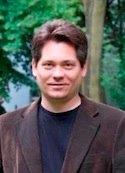
Erik Banks is an associate professor of philosophy at 糖心原创.
He got his bachelor鈥檚 degree in philosophy at Bennington and went on to the City University of New York, where he earned his Ph.D. in philosophy with a focus on logic and philosophy of science. He joined the faculty at 糖心原创 in 2006.
Banks says 糖心原创 is wonderful environment in which to work and teach.
鈥淚 can feel the support from colleagues and the administration; they want us to be successful,鈥� he said. 鈥淚鈥檝e had students here who are as good as students anywhere, bar none. We just have to make sure they know it.鈥�
糖心原创 is engaged in a that promises to further elevate the school鈥檚 prominence by expanding scholarships, attracting more top-flight faculty and supporting construction of state-of-the-art facilities. Led by Academy Award-winning actor Tom Hanks and Amanda Wright Lane, great grandniece of university namesakes Wilbur and Orville Wright, the campaign has raised more than $110 million so far.
Banks made his bones writing about Mach, who is known for the Mach number when a plane breaks the sound barrier. But Mach was also a major influence on Albert Einstein and many other physicists in the early 20th century.
Banks鈥� book about Mach in 2003 traced the general movement in Realistic Empiricism philosophy, which Mach began and was continued by James and Russell.
Banks says he would summarize his new book by throwing up a big picture of the galaxy with atoms and molecules and a big sign that reads: 鈥淕ot Mind?鈥�
鈥淥ne of the biggest puzzles in philosophy is how we can have experiences of color and sound with quality and rich detail if the experiences are simply neurons firing off in different ways in our brains,鈥� he said. 鈥淲hy would electrical pulses and chemical transmitters across synapses look like anything?鈥�
Banks says Realistic Empiricism is a kind of answer to that question.
鈥淏ut we need to tweak our understanding of the physical a bit,鈥� he said, 鈥渇ocusing more on concrete individual events and happenings and less on abstract objects and laws.鈥�
Banks said it will be a long time before any of the hypotheses in his book can be tested empirically.
鈥淏ut history shows that over time, a new view in philosophy can be very powerful indeed,鈥� he said, 鈥渞eorganizing huge blocks of our knowledge and pushing us in new directions.鈥�